EVELYSS / Guides / Accessories & Jewelry
Accessories & Jewelry · Ms. EvelyssHow to Stop Boots Rubbing the Back of Your Heel (New and Old Boots)
First check why they rub. If your heel lifts as you walk, the boot is slightly big: add a heel grip or a thin insole to hold your foot still. If the back presses hard, it's stiff or tight: wear the boots at home with thick socks for short spells, or ask a cobbler to stretch or soften the heel.
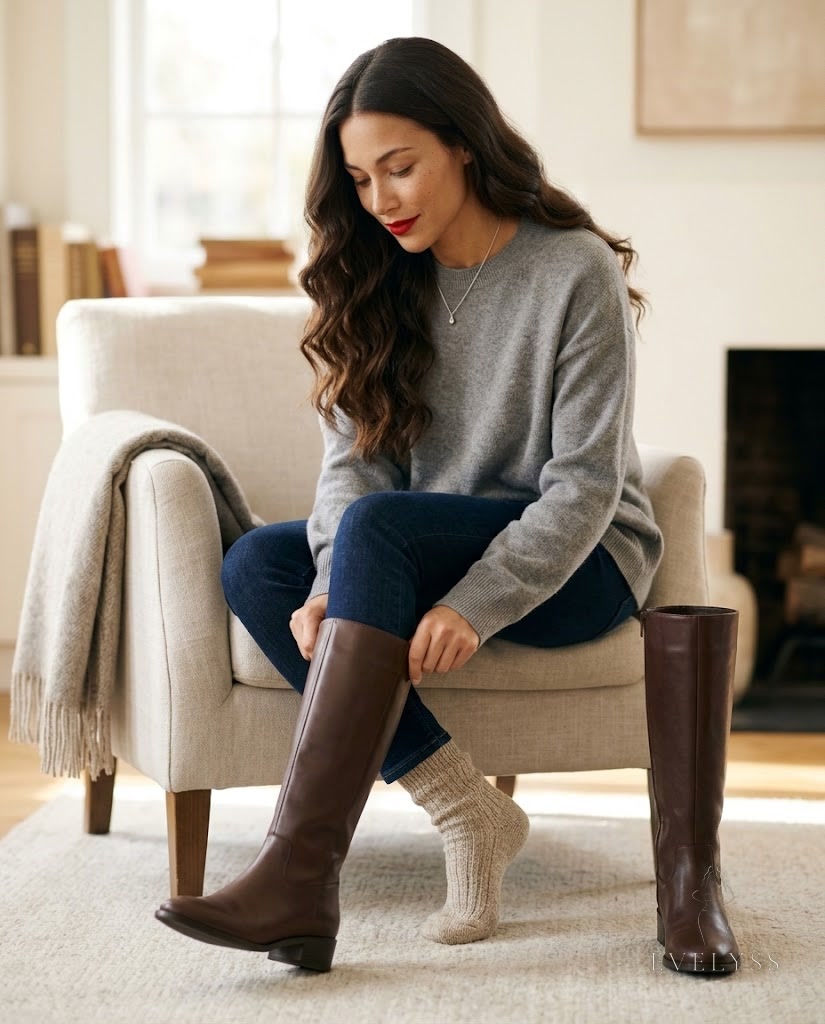
“The back of the heel is where good boots and bad days meet. Most people grit their teeth and hope it gets better. It usually only gets better when you work out whether the boot is too loose or too stiff, and fix that.”Her take
Why boots rub the back of the heel
There are two main causes, and they need opposite fixes. A boot that's a little too big lets your heel lift and drop with every step, and that up-and-down friction is what rubs. A boot that's stiff or narrow at the heel presses into the same spot, especially when the leather is new and the heel counter, the firm cup at the back, hasn't softened.
A seam or a stitched edge inside the heel can also catch the skin, and so can the top edge of a short ankle boot cutting into your Achilles area. Feet are often slightly different sizes, so one boot may rub while the other doesn't.
Too big or too small? How to tell
Put the boots on with the socks you'll wear and walk around on a hard floor, including up a few stairs.
- Heel slips up noticeably with each step, and you can slide a finger down behind your heel easily: the boot is a little big or loose at the heel.
- Heel doesn't move, but you feel a hard pressure point that gets sore within minutes: the heel is stiff or narrow.
- Your toes touch the end or the sides pinch as well: the boot is simply too small, and padding won't fix that.
- Rubbing only at one specific point, with a ridge you can feel: it's likely a seam or an edge inside the boot.
Fixes for boots that are slightly too big
Self-adhesive heel grips, soft suede or gel pads that stick inside the back of the boot, are the classic fix. They fill the gap so your heel stays in place. Position them where your heel actually sits, slightly above the sole, and try the boots before committing to the placement.
A thin full-length insole lifts your foot and fills volume, which also reduces heel slip, as can a slightly thicker sock. For lace-up boots, lace firmly through the top eyelets and use a heel-lock lacing method to hold the heel down.
Fixes for boots that are stiff or tight at the heel
Break them in at home first. Wear them with thick socks for an hour or two at a time, indoors, over several evenings. Leather moulds to your foot with warmth and movement. Gently flexing the back of the heel with your hands before wearing helps too.
A cobbler can stretch boots, soften a stiff heel counter, or skive down an internal seam that's catching. For a sharp top edge on an ankle boot, a small adhesive pad on the inside of the collar can stop it digging in. Don't try to force stiff boots through a long walk or a day at a Christmas market; build up gradually.
Protect your heels while you sort the boots
Put a blister plaster or a strip of padded plaster on the back of your heel before you set off, not after it starts to sting. Socks matter: smooth, close-fitting socks without a seam at the heel reduce friction, and wool blends stay drier than cotton, which helps.
If a blister has already formed, keep it clean and covered and give the boots a rest until it settles. For anything that's very painful, isn't healing, or if you have diabetes or circulation problems, ask a pharmacist or GP for advice.
Questions people ask
Will boots stop rubbing once they're broken in?
If they're stiff but the right size, usually yes. If the heel slips because they're too big, breaking in won't fix it; heel grips will.
Do heel grips work in boots?
Yes, for boots that are slightly loose at the heel. Place them where your heel sits and test before fixing them firmly.
Can a cobbler stop boots rubbing?
Often. They can stretch leather, soften a stiff heel counter or smooth down an internal seam.
How much heel slip is normal in new boots?
A very slight lift can be normal in stiff new leather. If your heel moves noticeably with every step, the boot is too loose.
What socks stop boots rubbing?
Smooth, close-fitting socks with no heel seam. Wool blends are a good choice for boots.
The takeaway
Work out whether the boot slips or presses, grip or fill a loose heel, break in a stiff one at home, plaster first, and let a cobbler handle seams.
Read next
New looks, every day
Her shorts, the Sunday code word for her promo codes, and answers to your questions, on every platform as @msevelyss.
Follow her everywhere → Ask her live →