EVELYSS / Guides / Accessories & Jewelry
Accessories & Jewelry · Ms. EvelyssHow to Clean a Pearl Necklace at Home Without Ruining It
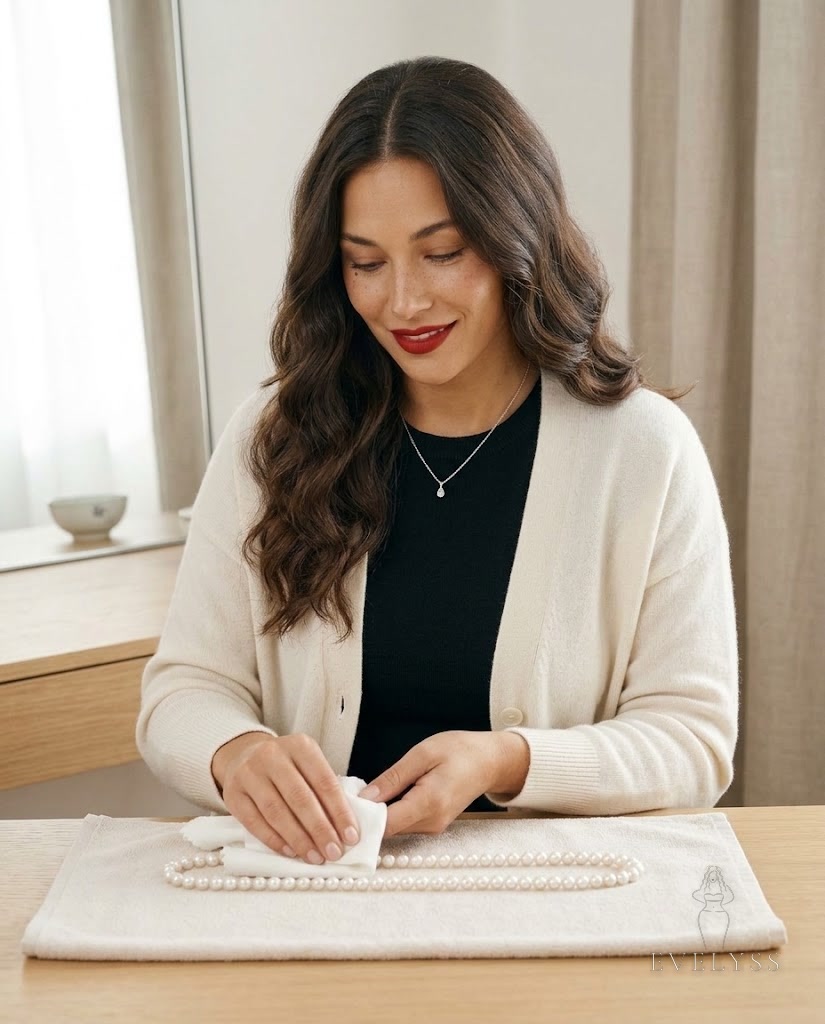
Wipe pearls with a soft, slightly damp cloth after wearing them. For a deeper clean, dip the cloth in warm water with a drop of mild soap, wipe each pearl, then wipe again with plain water. Dry a strand flat overnight. Never soak them or use ultrasonic cleaners, steam, ammonia or jewelry dip.
“Pearls ask for so little, and most of the damage comes from trying too hard. Put them on last, take them off first, and give them a wipe. They're not silver, so they don't need a polish, and they never need a bath.”Her take
Why pearls need different care from other jewelry
A pearl's glow comes from nacre, thin layers of calcium carbonate crystals held together by an organic protein. It's much softer than metal or most gemstones, as low as 2.5 on the Mohs hardness scale, about the same as a fingernail, so ordinary jewelry cleaners, abrasive cloths and scrubbing can dull or scratch it. Acids, including those in perfume, hairspray, cosmetics and even sweat, slowly wear away the shine.
Most strung pearls are also threaded on silk, which weakens when wet and can stretch. So you're not just taking care of the pearls, you're also taking care of the thread. That's why a method that works on silver or gold can be a disaster here, and why less is better.
The two-minute wipe after each wear
Before you put pearls away, wipe them with a very soft, clean cloth, such as a lens cloth, a piece of cotton T-shirt or a jewelry cloth with no polish in it. Slightly dampen it with plain water if you've been wearing perfume or sweating. Roll each pearl under the cloth with your fingers so you reach all the sides.
This small habit does more than any deep clean, because it removes skin oil and product before it can build up. A lightly worn strand may need only this for months at a time. If you used a damp cloth, let them air-dry for a little while before you close your jewelry box.
How to deep-clean pearls with mild soap
Do this only when your pearls look dull or feel sticky, perhaps a couple of times a year if you wear them often. Work on a towel, away from an open sink drain, and keep the clasp as dry as you can.
- Mix a cup of warm water with a small drop of mild, dye-free dish soap.
- Dip a soft cloth in the water and wring it out until it's barely damp.
- Wipe one pearl at a time, turning it so you reach the area around the drill hole and knots.
- Rinse the cloth in clean water, wring it out, and wipe every pearl again to remove the soap.
- Pat the whole piece with a dry cloth, then lay it flat on a clean, dry towel.
How to dry a pearl necklace properly
Lay the strand flat and straight on a soft, dry towel, and leave it overnight or until the silk knots feel completely dry. Don't hang it to dry, because wet silk stretches under the weight of the pearls, and you'll end up with gaps between the knots. Don't use a hair dryer, radiator or sunny windowsill either, because high heat and intense light can damage pearls.
Before you wear the necklace or put it away, touch a knot and the area close to the clasp. If either feels at all cool or damp, wait longer. Wet silk also tends to attract dirt, and that's what can leave a dingy gray look on the thread.
What never to use on pearls
Ultrasonic cleaners, steam cleaners and liquid jewelry dips are all out, as are ammonia, bleach, vinegar and lemon juice. So are baking soda and toothpaste, both of which are abrasive. Silver polish cloths may also contain chemicals that harm nacre. If a jeweler cleans your jewelry, make sure they know to keep the pearls out of the ultrasonic unit.
If your pearls are set in a ring or pendant with diamonds, clean the metal and stones around them with a dry or lightly damp soft brush, keeping away from the pearl. If the setting has glue holding the pearl, avoid soaking at all, because water can loosen the bond.
Storage and restringing
Store pearls in a soft pouch or a lined compartment on their own, so that harder stones and metal clasps can't scratch them. Lay long strands flat instead of hanging them, and keep them out of airtight plastic bags. Avoid hot, dry spots and bright sunlight, because too much of either can dry out and crack the nacre.
Check your strand regularly for frayed thread, dark or stretched silk near the clasp, or gaps between pearls and knots. There's no fixed schedule, but a common guide is every year or two for a frequently worn strand, and every few years for a less worn one. Ask for knots between each pearl, so that a break costs you just one pearl.
Questions people ask
Can you get pearls wet?
A brief wipe with a damp cloth is fine, but don't soak them or wear them in the shower or pool. Water can weaken silk thread and dull the surface over time.
How can I tell if my pearls are too dirty to clean at home?
If the silk looks gray or stretched, or the surface stays dull after a gentle clean, take them to a jeweler who works with pearls for an inspection and restring.
Can I clean pearl earrings the same way?
Yes. Wipe the pearl with a damp soapy cloth, then a clean damp cloth, and dry it. Clean the posts with a separate cloth and keep moisture away from any glue.
Why do pearls go last when getting dressed?
Because perfume, hairspray and makeup can dull them. Put them on after everything has dried, and take them off first when you get home.
Can I clean fake or faux pearls the same way?
Use only a dry or barely damp cloth. Faux pearls have a thin surface coating that can peel if it's rubbed hard or exposed to soap too often.
The takeaway
Last on, first off, wipe after every wear, soap only when needed, dry flat, and leave the ultrasonic cleaner for something else.
Read next
New looks, every day
Her shorts, the Sunday code word for her promo codes, and answers to your questions, on every platform as @msevelyss.
Follow her everywhere → Ask her live →