EVELYSS / Guides / Fashion Sense
Fashion Sense · Ms. EvelyssHow to Stop a Wool Jumper Itching (What Helps, What Doesn't, What to Buy Next)
Wear a soft barrier such as a fine cotton or silk long-sleeved top underneath, with a high neck if your collar is the problem. Then hand wash the jumper cold with wool detergent and a little hair conditioner, dry it flat, and buy finer fibres next time: extra-fine merino, cashmere or a lined knit.
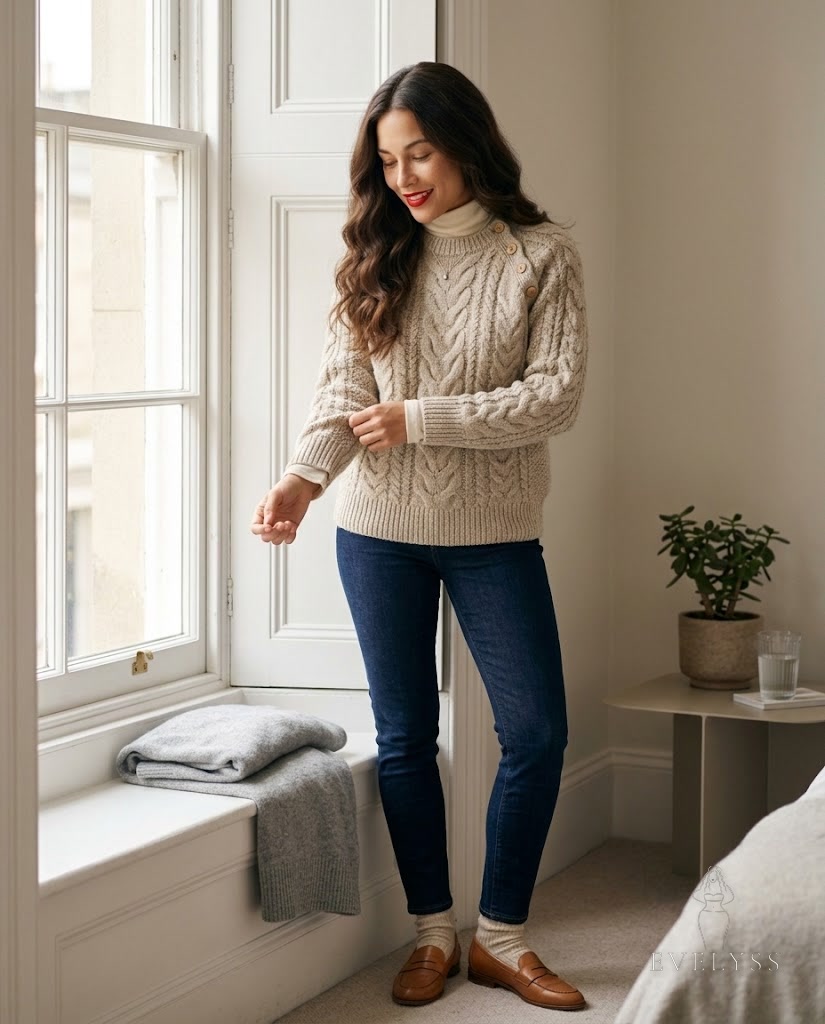
“Don't stand in front of a lovely jumper and tell yourself it'll soften if you're brave. Some wool never will. Give it a barrier and one proper wash, then be honest about whether it's a jumper you'll actually wear.”Her take
Why some wool itches
The prickle usually comes from the fibres themselves. Thicker, stiffer wool fibres don't bend when their ends press against your skin, so you feel them. Finer fibres bend more easily, which is why fine merino or cashmere normally feels softer than a coarse, rustic knit.
Fibre thickness is measured in microns, and it's the most useful number if a label gives one. Figures vary by source, but merino is commonly around 17 to 19 microns and cashmere around 14 to 19, while coarser wools can sit well above 25, where many people start to feel a prickle. That's why two jumpers both labelled 100% wool can feel completely different. Your skin matters too: the neck, inner wrists and waist often feel it first. If you get a rash, swelling or lasting irritation, take the jumper off and speak to a pharmacist or GP rather than trying to soften your way through it.
Add a barrier first
Put something between the wool and your skin. This is the simplest fix and the one most likely to work. Wear a fine cotton, silk or smooth merino long-sleeved top, and check that its sleeves are long enough to cover the inner wrist. A short sleeve leaves the most sensitive part of your arm exposed.
Match the neckline to the problem. If the collar itches, wear a thin roll-neck or high crew under a crew-neck jumper and let a neat line show on purpose. If the itch is at your waist, tuck a smooth top into your trousers so the hem can't rub. A collared shirt under a crew-neck knit does the same job and looks deliberate.
Try a conditioner soak
If the barrier isn't enough, a gentle soak is worth trying on a washable jumper. It may help a little, particularly on knits that are stiff or have been treated with finishing products, though results vary and it won't turn a coarse knit into cashmere. Check the care label first, and skip this on anything marked as dry clean only.
- Fill a clean basin with cold or lukewarm water and swirl in a small amount of wool detergent. Avoid biological detergent, because its protease enzymes can damage wool.
- Press the jumper under for about 10 minutes, without rubbing or wringing.
- Rinse in water at the same temperature, then soak for 10 to 15 minutes in fresh water with a teaspoon or two of hair conditioner well mixed in.
- Rinse until the water runs clear, then gently press out the water and roll the jumper in a clean towel.
- Reshape it and dry flat, away from direct heat.
What to ignore or use carefully
The freezer trick gets passed around a lot, usually with a jumper sealed in a bag overnight. It's harmless if the jumper is clean and dry, but don't count on it. Some wearers swear by it and others notice nothing. Fabric conditioner is also divisive, and many knitters avoid it on wool because it can coat the fibres and leave them feeling flat.
White vinegar in the rinse is another popular tip, but it's more useful for removing residue than for changing a fibre's feel. Heat is the one to rule out completely. Hot water and a hot tumble dryer can shrink and felt wool, leaving you with a jumper that's tighter, thicker and often more scratchy.
How to buy a jumper that won't itch
Do the neck test in the shop. Hold the knit against the side of your neck or inner wrist for at least 30 seconds, because the hand is far less sensitive. If it prickles there, it'll prickle at your desk. If you're buying online, check the returns policy and test it at home before you remove the tags.
Look for extra-fine merino, cashmere or a tightly spun smooth yarn, and treat chunky, hairy or rustic knits with more suspicion. Lined jumpers and cotton-wool blends can be a good middle ground. Softness alone doesn't mean quality, but comfort is what decides whether a jumper leaves your wardrobe.
Questions people ask
Will an itchy jumper soften after washing?
It may soften slightly, especially if a finishing product is part of the problem. A naturally coarse wool will usually stay prickly, so use a barrier layer or return it if you still can.
Does hair conditioner really soften wool?
It can make some knits feel smoother, but the results vary. Use a small amount in cold or lukewarm water on a washable jumper, then rinse well.
What's the least itchy type of wool?
Extra-fine merino and cashmere are usually the softest choices. Fibre fineness matters more than the word wool on the label, so always test the knit against your neck.
What can I wear under a wool jumper so it doesn't itch?
A thin cotton, silk or smooth merino long-sleeved top. Choose a neckline that covers the area where the jumper touches you, and make sure the sleeves reach your wrists.
The takeaway
Layer first, try one gentle soak on a washable knit, keep heat well away, and test your next jumper on your neck instead of your hand.
Read next
New looks, every day
Her shorts, the Sunday code word for her promo codes, and answers to your questions, on every platform as @msevelyss.
Follow her everywhere → Ask her live →