How to Stop Foundation Pilling (Little Balls and Flakes on Your Face)
Pilling usually comes from too much product underneath, not giving skincare time to settle, or layering formulas that don't mix. Use less serum and moisturiser, wait a few minutes between steps, keep primer and foundation the same base (water or silicone), and press foundation on rather than rubbing.
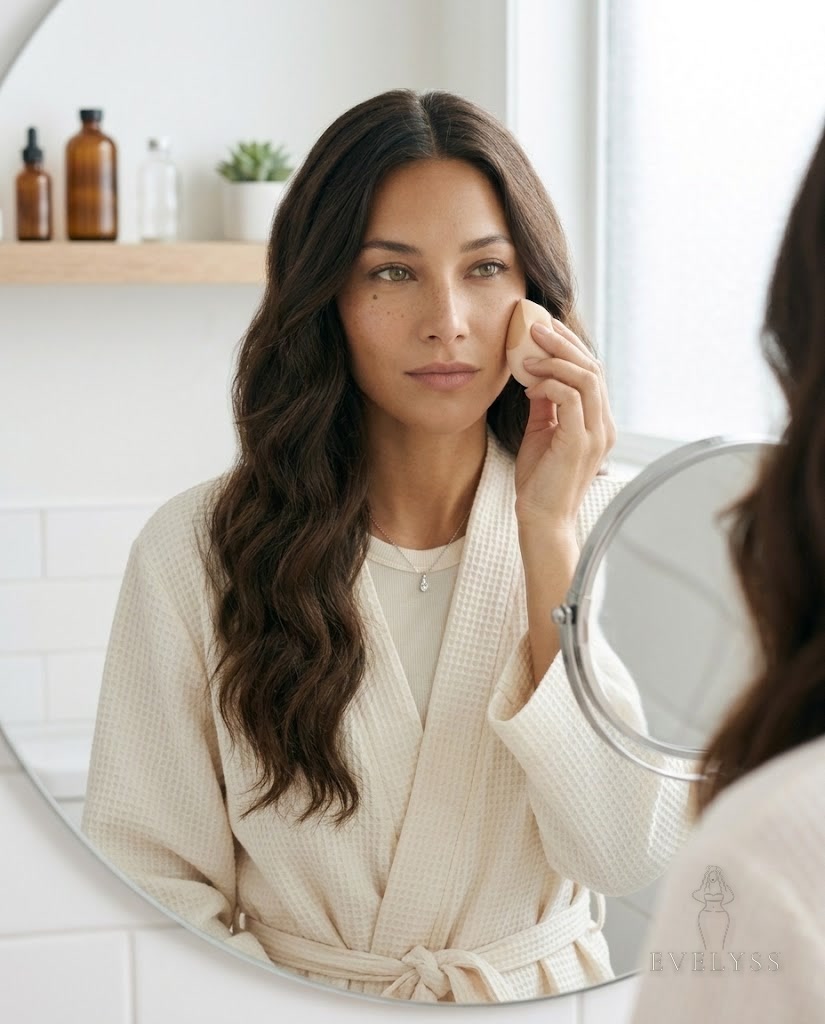
“When foundation pills, people usually blame the foundation. Most of the time it's the layers underneath it, all applied in a rush. Slow the routine down and use less, and most foundations behave.”Her take
What is pilling, exactly?
Pilling is when products roll up into small balls or flakes on the skin as you blend, usually around the nose, chin and cheeks. It happens when the layer underneath hasn't settled, when there's more product than the skin can take, or when two formulas don't sit well on top of each other and slide apart under friction.
It's different from dry flakes of skin. If the bits are coloured and come off on your sponge or brush, it's product pilling. If they're there before you start, see the winter dry-skin guide instead.
Use less underneath
The most common cause is simply too much. A pea-sized amount of moisturiser is often enough for the face, and serums usually need only a few drops. Sunscreen does need a generous amount to protect properly, so cut back elsewhere rather than skimping on SPF.
If you use several serums, try dropping one in the morning and saving it for the evening. Fewer layers under foundation means fewer chances for them to roll up.
Wait between steps
Give each layer time to settle before the next. As a practical routine: serum, wait about a minute; moisturiser, wait two or three minutes; sunscreen, wait several minutes until it no longer feels slippery; then primer or foundation. Brushing your teeth or doing your hair in the gaps makes it painless.
A quick test: lightly touch your cheek with a clean fingertip. If it feels wet or slides, wait longer. If it feels smooth or very slightly tacky, you're ready.
Match water-based and silicone-based formulas
Products are often mostly water-based or silicone-based, and mixing the two can make them separate and pill. Check the first few ingredients: if words ending in -cone or -siloxane, such as dimethicone or cyclopentasiloxane, appear near the top, the product is likely silicone-heavy. If water and glycerin lead with no silicones high up, it's likely water-based.
Try to keep your primer and foundation in the same family. If your foundation is water-based, skip a heavy silicone primer, or vice versa. When you do mix, a common rule of thumb is to apply the thinner, more watery products first.
- Pilling only on days you use primer: try without it, or swap to one with the same base as your foundation.
- Pilling only with one sunscreen: give it longer to set, or try a different texture.
- Pilling everywhere, every day: cut the amount of each product by half for a week and see if it stops.
Apply foundation by pressing, not rubbing
Friction is what rolls product into balls. Instead of swiping back and forth, dot foundation on and press it in with a damp sponge, or stipple with a dense brush. If you use fingers, pat rather than rub.
Work in thin layers. One thin layer, then a second only where you need more coverage, is less likely to pill than one thick one. If a spot starts pilling, stop blending there, let it dry for a minute, and press gently.
Keep the skin surface smooth
Products can also catch on dead skin. A gentle exfoliating product used a couple of times a week, as the packaging directs, helps foundation glide. Don't over-exfoliate, though: irritated skin looks worse under make-up. If your skin is sore, red or reacting to products, stop and speak to a pharmacist or doctor.
Questions people ask
Why does my foundation ball up?
Usually too much skincare underneath, not waiting between steps, or a primer and foundation with incompatible bases. Rubbing makes it worse.
How long should I wait after moisturiser before foundation?
A few minutes, longer after sunscreen. Touch-test your cheek: if it feels wet or slippery, give it more time.
Can sunscreen make foundation pill?
Yes, especially thick or very rich textures. Let it set fully, and try a lighter texture if it keeps happening. Don't skip it.
Does primer cause pilling?
It can if it doesn't suit your foundation. Try a day without primer; if pilling stops, choose one with the same base as your foundation.
The takeaway
Less product, a few minutes between steps, primer and foundation in the same family, and press rather than rub.
Read next
New looks, every day
Her shorts, the Sunday code word for her promo codes, and answers to your questions, on every platform as @msevelyss.
Ask her yours