How to Keep Foundation From Looking Dry and Flaky in Winter
Flaky foundation is usually a prep problem, not a formula problem. Exfoliate gently once or twice a week, apply moisturizer and let it sink in, then press a thin layer of hydrating or satin foundation in with a damp sponge. Set only where you shine, and skip heavy powder on dry patches.
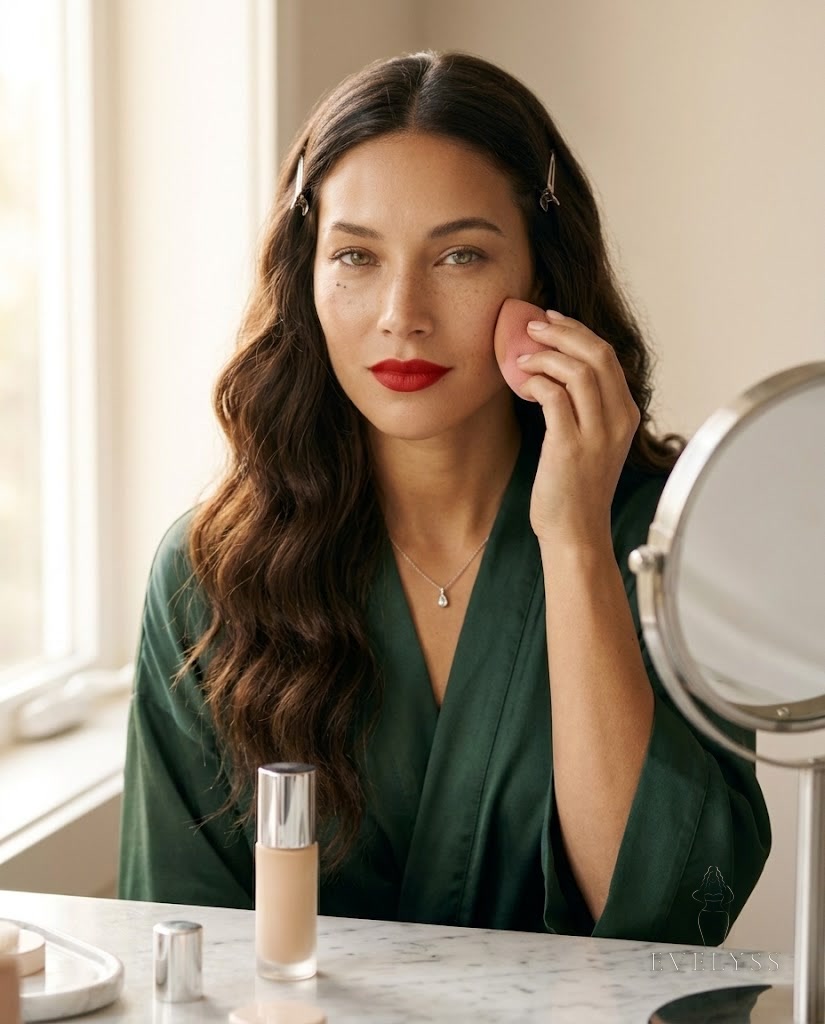
“Foundation can't hide texture it's sitting on top of. It clings to it. Fix the skin underneath first, wear less product, and let a little of your own skin show. Winter makeup looks best when it looks like skin.”Her take
Why does foundation look flaky in winter?
Cold air outside, heating inside and wind all leave skin drier. Dry patches have raised edges, and foundation catches on them. Pigment collects around the flakes and makes them more visible, especially around the nose, chin and eyebrows.
Matte, long-wear formulas and heavy powder make it worse because they're designed to grip and absorb. A formula that looked perfect in summer can look dry and patchy by December. That doesn't mean you need to change everything. Usually it means changing the prep and the finish.
Step 1: How should you prep dry skin the night before?
Smooth skin starts the night before. Once or twice a week, use a gentle exfoliant, either a mild chemical one or a soft cloth, to lift loose flakes. Don't scrub hard or exfoliate every day; over-doing it can leave skin more irritated and flakier.
On those nights and the others, finish with a richer moisturizer than you'd use in the morning. If skin is cracked, sore or doesn't improve, stop exfoliating and ask a dermatologist or pharmacist.
Step 2: What should you put on before foundation?
In the morning, apply a hydrating layer, then a moisturizer suited to dry skin, and give it a few minutes to sink in. Foundation applied over wet or greasy moisturizer slides and separates; foundation applied over dry, tight skin clings.
Add sunscreen as usual and let it settle. A hydrating primer pressed only onto dry areas can help, but skip mattifying or pore-filling primers on dry patches; they're made to absorb oil and blur, which can make flakes stand out.
Step 3: Which foundation finish works on dry skin?
The finish matters more than the brand. Choose by how dry your skin is right now, not by the label you wore in summer.
- Matte or long-wear: most likely to cling to flakes. Use only on oily areas, or save it for warmer months.
- Satin or natural: the safest winter choice. Some glow, but holds up through the day.
- Dewy or luminous: kindest to dry skin. Blot or lightly powder the center of the face if it looks greasy.
- Skin tint or tinted moisturizer: lightest coverage, least likely to show texture. Spot conceal where needed.
- Cream stick or compact: good coverage with comfort. Warm it on your fingers before applying.
Step 4: How do you apply foundation so it doesn't cling?
Use less than you think. Start with a small amount in the center of the face and press it outward with a damp sponge or your fingertips. Pressing and patting lays product down; dragging and buffing back and forth lifts flakes and catches on them.
Build coverage only where you need it, and use concealer for spots rather than adding more foundation everywhere. Around the nose, mouth and brows, where flakes are worst, use the thinnest layer, or nothing at all.
Step 5: How do you set foundation without drying it out?
Powder only where you shine, usually the sides of the nose and the center of the forehead, and use a small brush with a little finely milled powder. Leave the cheeks and any dry patches unpowdered.
A hydrating setting mist helps the layers melt together and takes away any powdery look. During the day, tap a tiny bit of moisturizer or balm onto a flaky area with a fingertip, then press it smooth, rather than adding more powder.
Questions people ask
Why does my foundation look flaky?
It's catching on dry patches. Gentle exfoliation, more moisturizer, a satin or dewy finish and less powder usually fix it.
How do I fix cakey foundation on dry skin?
Use less product, press it in with a damp sponge instead of buffing, and spray a hydrating mist to soften powdery layers.
Should I mix moisturizer into my foundation?
You can, to sheer it out and add slip, but it also lowers coverage and can change how long it lasts. Try it on one area first.
Is powder foundation bad for dry skin?
It tends to sit on dry patches and look flat. Liquid, cream or skin-tint formulas usually look smoother on dry winter skin.
Do I need a primer for dry skin?
Not always. Good moisturizer often does the job. If you use one, choose a hydrating primer and skip mattifying ones on dry areas.
The takeaway
Gentle exfoliation, moisturizer that's had time to sink in, a satin or dewy finish, thin layers pressed in, and powder only where you shine.
Read next
New looks, every day
Her shorts, the Sunday code word for her promo codes, and answers to your questions, on every platform as @msevelyss.
Ask her yours