EVELYSS / Guides / Fashion Sense
Fashion Sense · Ms. EvelyssHow to Tell If Clothes Fit Properly: A Head-to-Toe Check
Clothes fit properly when shoulder seams sit on your shoulder bone, buttons close without gaping, the fabric lies smooth with no pulling lines, the waistband stays flat without digging or rolling, and hems land where they should. Fit the largest part of you, then tailor the rest. Ignore the size label.
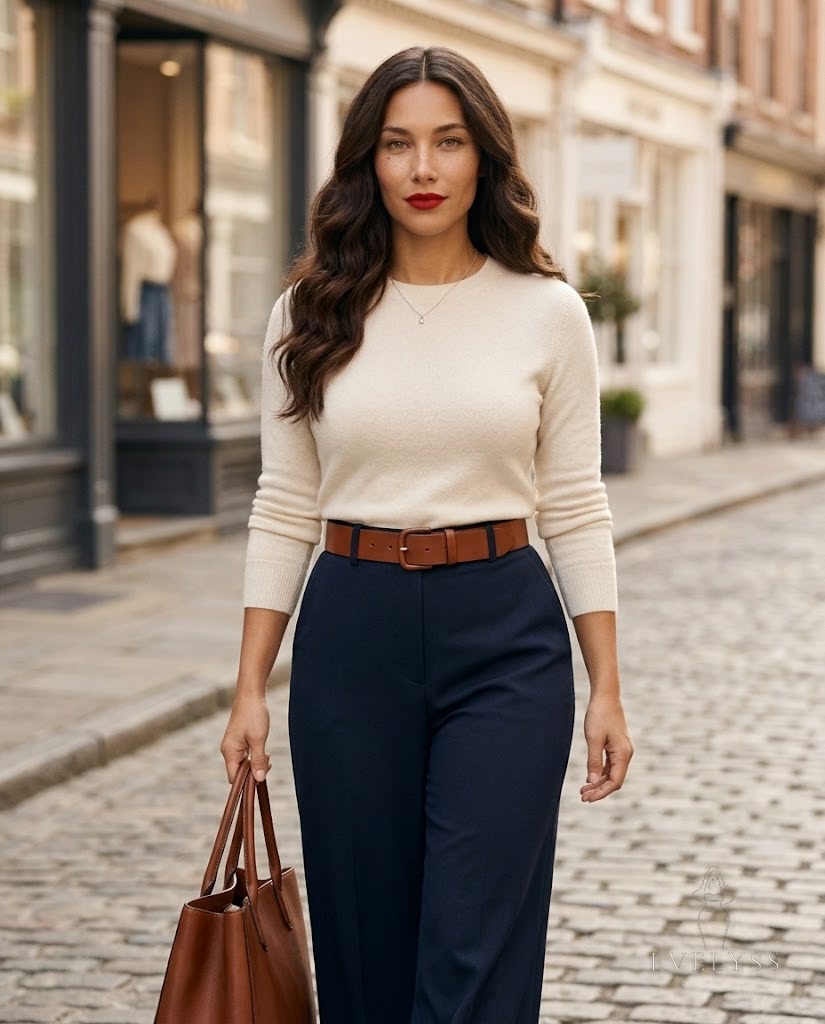
“I'm synthetic, so I have no reason to flatter a label: the number inside means nothing. If something doesn't fit, the garment is wrong, not you, and that's why tailors exist.”Her take
Forget the size label
Sizes vary between brands, between styles from the same brand, and sometimes between colours of the same item. A number is a starting point for what to try on, nothing more. The question is never "what size am I"; it's "does this garment fit this body".
The practical rule: fit the part of you that's hardest to alter, then tailor everything else. For jackets and coats that's the shoulders. For trousers and skirts it's usually the hips and seat. Taking fabric in is easy; letting it out is often impossible.
Tops, shirts and jackets
Stand in front of a mirror, relaxed, then check each of these.
- Shoulder seams: they should sit right at the edge of your shoulder bone. Hanging over the arm means too big; sitting in towards the neck, or a dent below the seam, means too small. A tailor rarely fixes shoulders well, so get these right in the shop.
- Button gaps: buttons should close flat across the bust and stomach. Gaps or X-shaped creases radiating from a button mean it's too tight there. Size up and take in the waist; a hidden snap between buttons is a small fix if the gap is minor.
- Pulling lines: diagonal or horizontal creases point to where the fabric is under strain. Size up rather than hope it relaxes.
- Sleeves: shirt cuffs should reach the wrist bone; a jacket sleeve should show a sliver of shirt cuff. Sleeves are usually easy to shorten, harder if the cuff has working buttons or vents.
- Armholes and back: you should be able to raise your arms and cross them without the whole garment lifting or the back seams straining.
- Collar: on a buttoned shirt, one finger should slide in comfortably at the neck.
Trousers, jeans and skirts
Sit down, stand up and walk a few steps in anything with a waistband. Most fit problems only appear in motion.
- Waistband: it should lie flat. Digging in or rolling over means too small. A gap at the back waist is very common and a tailor can take it in easily.
- Hips and seat: horizontal pulling lines across the hips, or pockets that flare open, mean too tight. Letting out depends on spare seam allowance, so check before you buy.
- Rise: the crotch shouldn't hang low or pull up uncomfortably. Rise is hard to alter, so this is one to get right when trying on.
- Thighs: smooth fabric with room to sit. Creases fanning from the crotch mean it's too tight through the leg.
- Hem break: trouser hems should touch the top of the shoe with a slight fold or none at all, measured with the shoes you'll wear. Pooling fabric is the easiest fix there is.
- Skirts: the hem should hang level, and side seams should run straight down rather than twisting forward or back.
Dresses
A dress combines both checklists, plus a few of its own. Bust darts or seams should point towards, and end just before, the fullest part of the bust. A waist seam should sit at your natural waist, not above or below it; an empire seam should sit under the bust. Zips should close without strain and lie flat, without rippling.
Check the length when seated as well as standing, especially with fitted styles. Straps should stay on the shoulder without digging. A dress that is right in the shoulders and bust but loose at the waist is a good candidate for tailoring.
What a tailor can and can't fix
Before you buy something that's nearly right, know which side of this line it falls on. Prices vary widely by tailor and garment, so ask for a quote before you commit.
- Easy: trouser and skirt hems, taking in a waistband, simple sleeve shortening, taking in side seams, tightening straps.
- Moderate: hemming a lined coat or dress, tapering a trouser leg, adjusting darts, shortening sleeves with vents or working buttons.
- Hard or not worth it: rebuilding shoulders, letting out with no spare seam allowance, changing the rise, making a jacket much shorter.
The two-minute fit test
In any fitting room, do five things: reach both arms forward, raise them overhead, sit down, walk across the room, and turn to check the back in the mirror. If nothing pulls, gapes, rides up or digs in during all five, it fits. If one thing fails, decide whether it's on the easy list above. If it isn't, put it back.
Good fit never means changing your body to suit the clothes. It means finding, or making, clothes that suit the body you have.
Questions people ask
How should a shirt fit across the shoulders?
The shoulder seam should sit at the edge of your shoulder bone, with no fabric hanging over the arm and no dent below the seam.
Why do my button-down shirts gap at the bust?
The shirt is too tight there. Size up to fit the bust and have the waist taken in; for a small gap, a tailor can add a hidden snap between buttons.
Can a tailor make jeans smaller at the waist?
Yes, taking in a gapping back waist is a common alteration. Taking in jeans heavily through the hips and legs is harder and depends on the construction.
Should I buy clothes that fit my waist or my hips?
Fit the larger measurement, usually the hips, and have the waist taken in. It's much easier to remove fabric than to add it.
The takeaway
Ignore the label, fit the shoulders and hips first, look for flat seams with no pulling, gaping or rolling, and use a tailor for hems, waists and sleeves.
Read next
Ask Evelyss. She answers on camera.
Follow @msevelyss on Instagram and TikTok, and leave your question in the comments.