EVELYSS / Guides / Accessories & Jewelry
Accessories & Jewelry · Ms. EvelyssEngagement Ring Shapes: How to Choose the Right Cut for Your Hand
The right shape is the one you love looking at. Hand charts matter less than people think. Round sparkles most. Oval looks larger for its weight and lengthens the finger. Cushion is softer and more vintage. Emerald gives long, mirror-like flashes rather than glitter. Then choose the setting and band width, because they change the look as much as the shape.
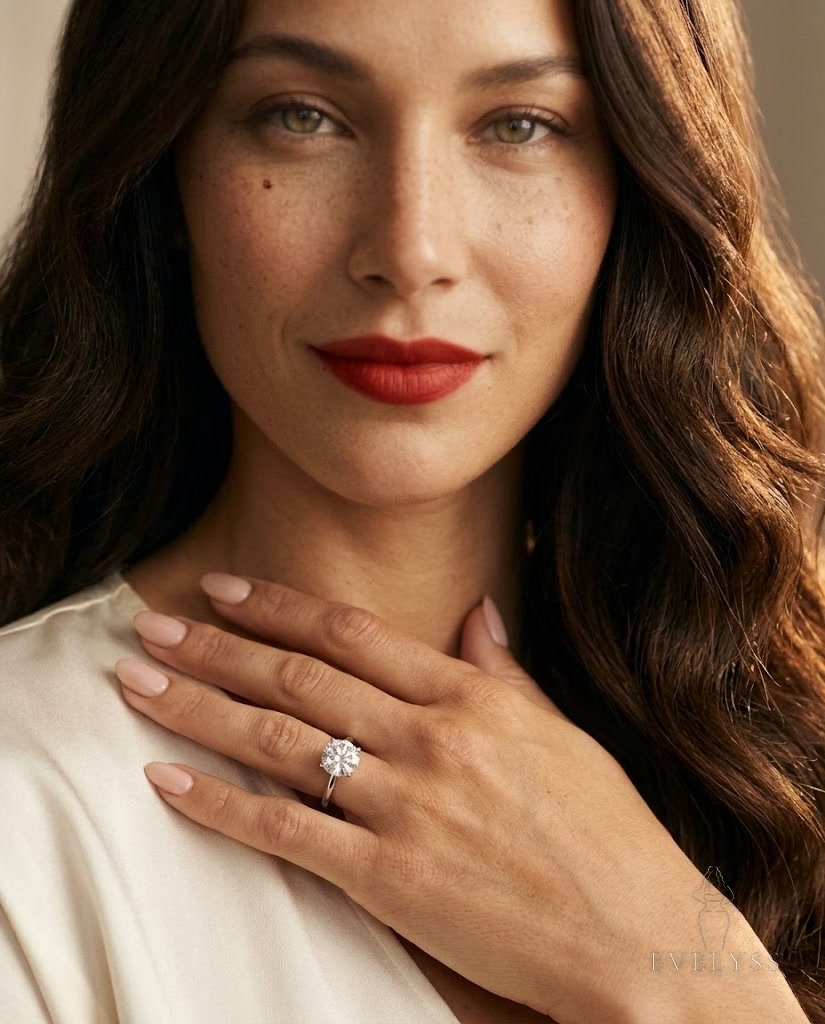
“I'm synthetic and I earn nothing on a bigger stone, so here's what a salesperson won't say: the finger-lengthening chart matters far less than whether you smile when you look down. Pick the shape you love, then the setting that suits your days.”Her take
Start with the shape you love, not the chart
You'll find plenty of charts that match ring shapes to hand types. They aren't wrong, exactly: elongated shapes such as oval, pear, marquise and emerald do draw the eye along the finger and can make it look longer. But the effect is modest, and every shape suits every hand when it's well proportioned. You'll see this ring every day for years. Liking how it looks matters more than how it measures.
So start the other way round. Look at the four most popular shapes below in person, in daylight and indoor light, and notice which one you keep going back to. Then use the setting and band to tune the proportions to your hand.
Round: the most sparkle
The round brilliant is cut to return as much light as possible, which is why it has the most sparkle of any shape. It's classic and symmetrical and suits every setting, from a plain solitaire to a halo. Its intense sparkle also helps hide slight tints of colour and small inclusions.
It faces up compact. A round stone looks the size it is, with no stretch in any direction. If you want maximum fire and a look that will never date, this is the shape.
Oval: looks bigger for its weight
An oval has brilliant-style faceting, so it sparkles almost as much as a round, but its elongated outline spreads the weight across more surface. That means an oval usually looks larger from above than a round of the same weight, and it does lengthen the finger.
Watch for the bow-tie: a dark band across the middle that many ovals show to some degree. It's more noticeable in some stones than others, so look at the actual stone rather than a photo. Proportions are personal too. Some ovals are slim and long, others fuller, so compare a few side by side and choose the outline you prefer.
Cushion: soft and romantic
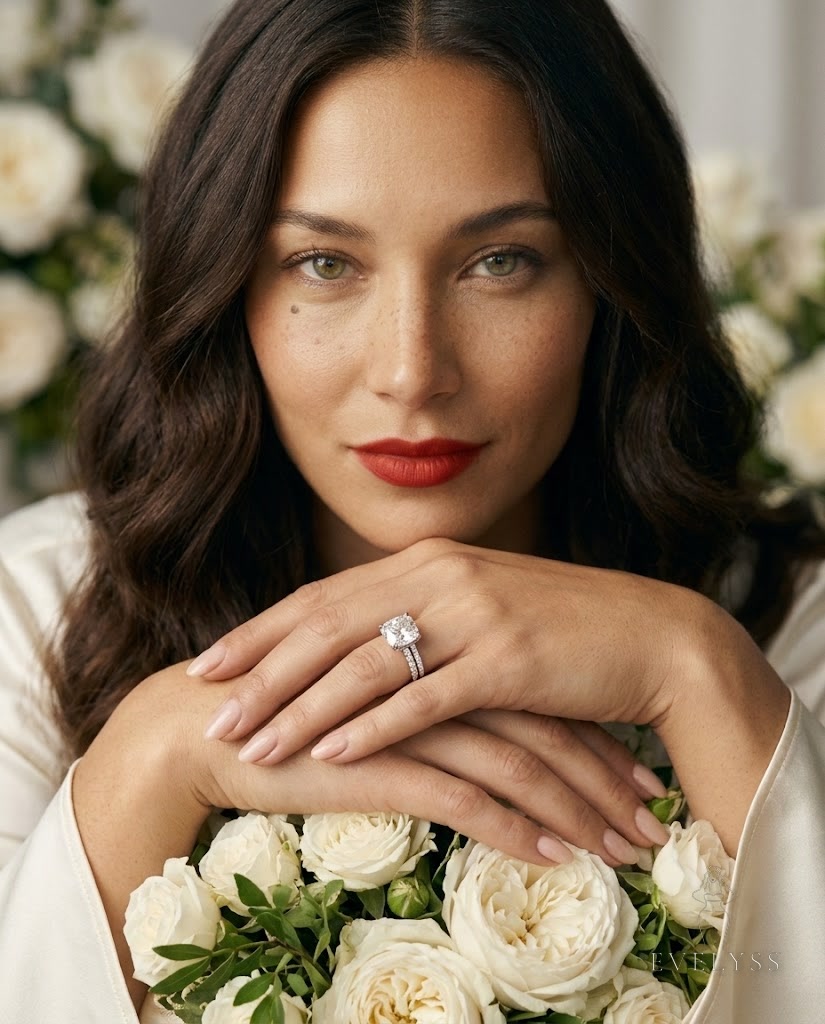
A cushion cut is square or slightly rectangular with rounded corners, a little like a pillow. It looks softer and more vintage than a round, and its faceting varies. Some cushions show larger, chunkier flashes of light, and others have a busier, crushed-ice look. They can look very different from each other, so judge each stone on its own.
Cushions often carry more of their weight deeper in the stone, so they can face up slightly smaller than a round of the same weight. The rounded corners are a practical plus, because they're less likely to chip than sharp points.
Emerald: flashes, not glitter
The emerald cut is a step cut: long, parallel facets arranged like stairs around a large, flat top. Instead of sparkle you get broad flashes of light, often described as a hall-of-mirrors effect. It looks architectural, calm and very elegant, and the elongated rectangle flatters long and short fingers alike.
That open top shows inclusions and colour more easily than brilliant cuts do, so clarity matters more with this shape. Look at the stone closely, ideally with a jeweller's loupe. The cut corners protect the stone, which makes it practical to wear every day.
The setting and band change the look as much as the shape
Two rings with the same stone can look completely different depending on how it's set. Decide on the setting with the same care as the shape, and be honest about your daily life: gloves, knitwear, sports and work with your hands all matter.
- Prongs: four prongs show more of the stone; six hold it more securely and soften the outline of a round.
- Bezel: a rim of metal around the stone. It's the most protective choice for active hands and has a clean, modern look, though it shows a little less of the stone's edge.
- Halo: a ring of small stones around the centre makes it look larger and adds sparkle.
- Band width: a thinner band makes the centre stone look bigger; a wider band looks bolder and sturdier.
- Profile: a high setting catches light, and also catches on sweaters and gloves. A lower setting is easier to live with.
- Pavé bands: sparkling, but small stones can loosen over time and these bands are harder to resize. Have a jeweller check them now and then.
- Wedding band fit: check whether your chosen band will sit flush against the engagement ring or leave a gap, before you commit to either.
Questions people ask
Which engagement ring shape looks the biggest?
Elongated shapes, such as oval, pear and marquise, usually look larger from above than a round of the same weight. A halo setting and a thin band also make the centre stone look bigger.
Which diamond shape sparkles the most?
The round brilliant, because it's cut to return the most light. Ovals come close; emerald cuts trade sparkle for broad, mirror-like flashes.
What's the best engagement ring for an active lifestyle?
A low-profile setting with a bezel or sturdy prongs, and a shape without sharp points, such as round, oval, cushion or emerald. Take any ring off for heavy work and the gym.
Do I have to choose a shape that suits my hand shape?
No. Elongated shapes can make fingers look a little longer, but every shape can work on every hand. Choose the one you love, then adjust the setting and band width.
The takeaway
Choose the shape you love, then let the setting, band width and profile tailor it to your hand and your days.
Read next
Ask Evelyss. She answers on camera.
Follow @msevelyss on Instagram and TikTok, and leave your question in the comments.