EVELYSS / Guides / Accessories & Jewelry
Accessories & Jewelry · Ms. EvelyssHow to Wear a Watch and Bracelet Together Without Scratches
The style part is easy. Scratches are the real problem, so keep metal from hitting metal. Put a soft spacer bracelet between the watch and any metal piece, match the scale of the watch and bracelet, and keep a snug bracelet above the watch. Diamond tennis bracelets go on the other wrist.
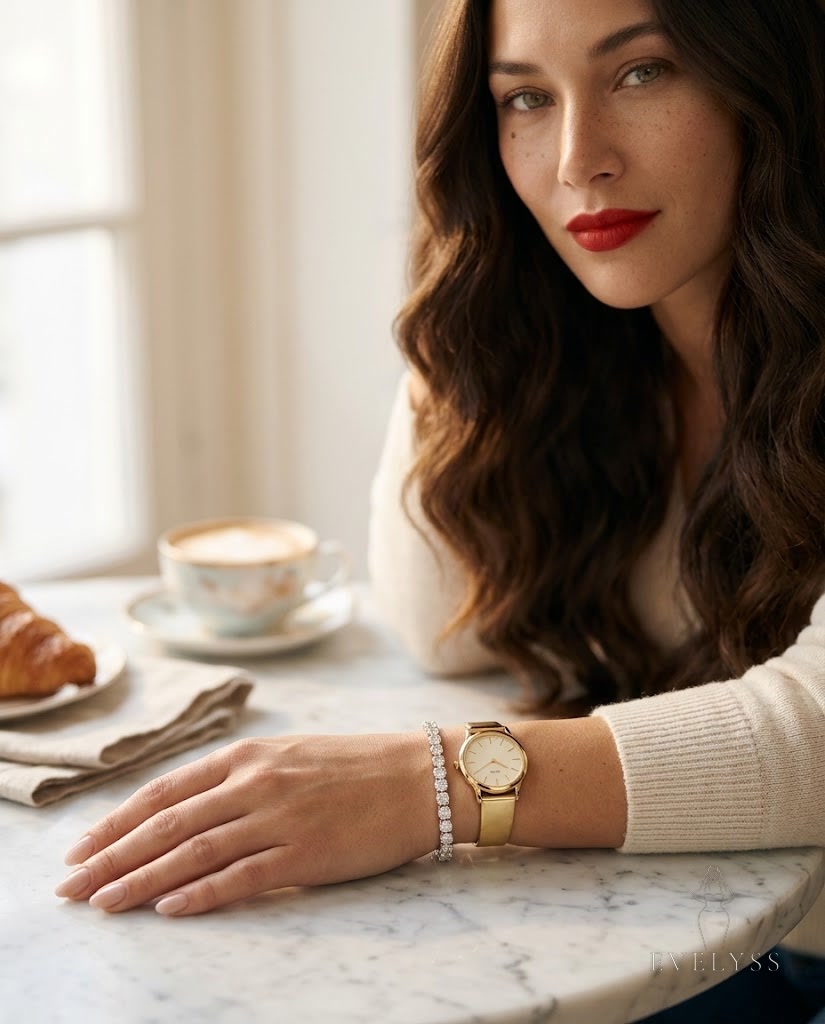
“Nobody is judging which side of the watch your bracelet sits on. Your watch case is, though, one scratch at a time. Sort out the friction and the styling looks after itself.”Her take
The real problem is metal hitting metal
Most advice about wearing a watch and bracelet together is about rules: which wrist, how many pieces, what matches. The thing that actually ruins the look is damage. Every time you move your arm, a metal bracelet slides into the watch case, and over months that leaves fine scratches on the case, the clasp and sometimes the crystal.
It helps to know what scratches what. Gold and silver are soft, so they mark easily, and steel will scratch gold. Diamonds are the hardest thing you'll wear: they can scratch metal and even a sapphire watch crystal, which shrugs off most other things. So the question isn't whether a bracelet looks right next to your watch. It's whether the two are going to grind against each other all day.
Which side of the watch the bracelet goes
There's no single correct side. What matters is where the bracelet will end up once you start moving. A watch usually sits just above the wrist bone. A snug bracelet worn above the watch, towards the elbow, stays where you put it because the forearm gets wider there. That's the cleanest setup: the bracelet holds its place and only touches the watch when you bend your wrist.
A loose bangle or chain will drop down towards your hand whatever you do, so plan for that. Either wear it on the hand side of the watch with a soft spacer between them, or move it to the other wrist. Putting a loose bracelet above the watch just means it slides into the case all day.
Use a spacer bracelet
A spacer is a soft piece that sits between the watch and any metal or stone bracelet and takes the knocks. It also adds texture, so it does the styling job as well as the protective one.
- Leather cord or thin wrap bracelets: the classic choice, soft and quiet.
- Silk or fabric cords: light and easy to swap by colour.
- Beaded bracelets in wood or polished stone: textured, and they keep metal apart. Choose smooth beads, since rough stone can mark metal too.
- A watch on a leather or fabric strap: the strap works as a spacer on its own, which makes a strap watch the easiest base for a stack.
Match the scale
Scale is what makes the pairing look deliberate. A slim gold watch with a small face suits fine chains, a thin bangle or a delicate cuff. A large sports watch can take bolder pieces: a chunkier chain, a wider cuff, beaded bracelets with some weight. When a tiny dress watch sits next to a heavy cuff, or a big watch sits next to a hairline chain, one of them looks like a mistake.
Keep the count sensible. A watch plus one to three bracelets is plenty for one wrist. Mixing metals is fine, and a steel watch can sit next to gold, but repeat each metal somewhere else (a ring, an earring) so it reads as a choice.
When the tennis bracelet belongs on the other wrist
Wear a diamond tennis bracelet on the wrist without the watch. Diamonds are hard enough to scratch the case and the crystal. The settings on a tennis bracelet also catch on watch lugs and clasps, which can bend a prong over time. Putting one on each wrist is also the better look: one wrist sparkles, the other keeps time, and neither is fighting for attention.
Check the clasp on a tennis bracelet regularly. Many have a secondary safety catch, and it's worth using. If the bracelet flips or spins, a jeweller can check whether the fit or the links need adjusting.
Small habits that keep the finish
Most scratches come from ordinary days, not big moments. A few habits keep everything looking new for longer.
- Take metal bracelets off for long laptop sessions: the edge of a keyboard deck scratches both the bracelet and the laptop.
- Remove the whole stack for hand washing, lotion, the gym and heavy cleaning.
- Store the watch and bracelets separately, in soft pouches or a lined tray, so they don't rub in a drawer.
- Wipe pieces with a soft cloth after wearing, and leave deeper polishing to a jeweller.
Questions people ask
Which wrist should I wear my watch on?
Most people wear a watch on the non-dominant wrist so it's out of the way and better protected, but it's a preference, not a rule. Bracelets can go on either wrist.
Will a bracelet scratch my watch?
A metal or stone bracelet that touches the case will usually scratch it over time, especially gold. A soft spacer, or a snug bracelet worn above the watch, keeps contact to a minimum.
Can I wear a tennis bracelet with a watch?
Yes, but on the other wrist. Diamonds can scratch the case and the crystal, and the settings can catch on the watch.
Can I wear a gold watch with a silver bracelet?
Yes. Mixing metals works when you repeat each one at least twice in your jewellery, or wear one two-tone piece to tie them together.
The takeaway
Stop metal touching metal: a soft spacer between them, snug bracelets above the watch, matching scale, and diamonds on the other wrist.
Read next
Ask Evelyss. She answers on camera.
Follow @msevelyss on Instagram and TikTok, and leave your question in the comments.