EVELYSS / Guides / Travel & Everyday
Travel & Everyday · Ms. EvelyssHow to Keep Clothes Wrinkle-Free When Traveling
Start with fabrics that resist creasing (wool, knits, jersey, crepe, most blends), roll the soft pieces, fold structured ones with tissue paper or bundle-wrap them, and don't overstuff the case. Hang everything the moment you arrive. For what still creases, a hot shower's steam or a travel steamer fixes most of it in minutes.
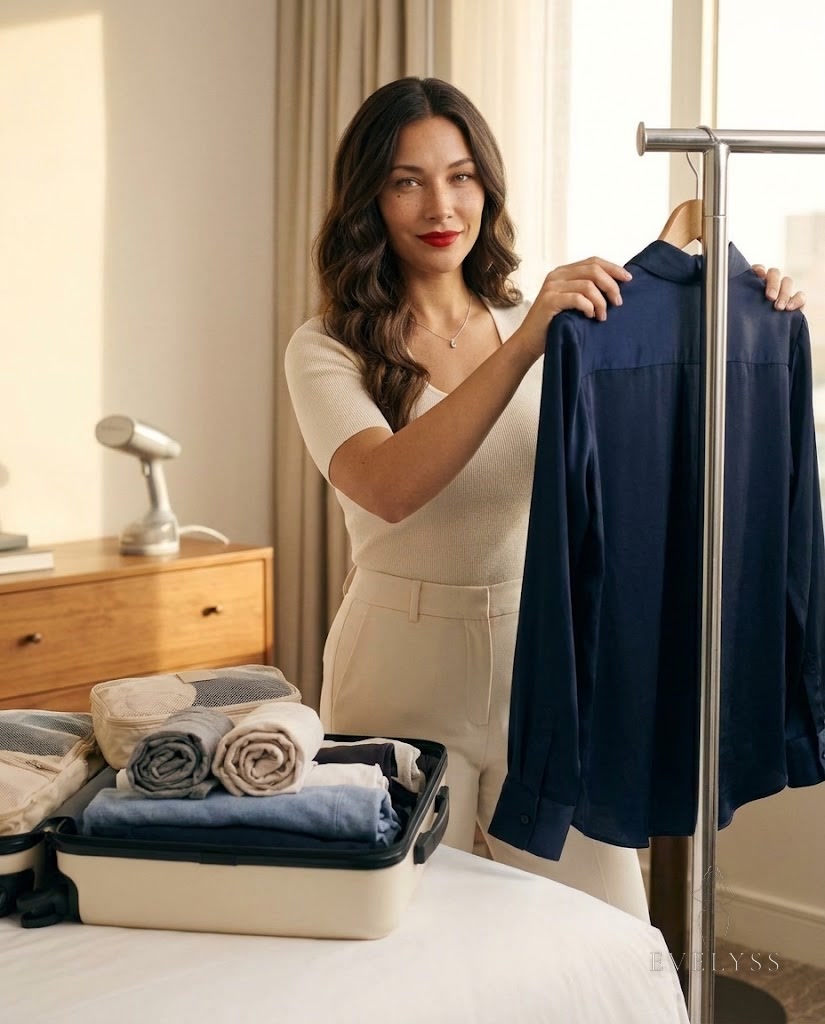
“No packing trick will save a linen shirt from being linen. If you hate wrinkles, the fix happens at the shop, not in the suitcase.”Her take
The Fix Starts at the Shop
The honest truth: some fabrics forgive and some never will. Packing technique helps, but it can't change what a fabric does under pressure, so the easiest wrinkle-free trip starts with what you buy and choose to pack.
The shop test: squeeze a handful of the fabric tightly in your fist for about ten seconds, then let go. If it springs back, it will travel. If it holds the crumple, it will come out of your suitcase looking exactly like that. Linen blends and cotton with a little stretch sit in between.
- Forgiving: wool and merino knits, jersey and other knits, crepe, polyester and nylon blends, fabrics with a little elastane, and denim (it creases at folds but reads as normal).
- Unforgiving: pure linen, crisp cotton poplin and lightweight shirting, rayon or viscose, and lightweight silks.
Roll the Soft Things
Rolling works best for knits, jersey, tees, leggings, casual dresses and sleepwear. Lay the piece flat, smooth it with your hands, fold the sleeves in, and roll tightly from the hem up. Tight rolls crease less than loose ones because the fabric can't shift and bunch inside the case.
Rolling isn't ideal for crisp shirts, tailored trousers or blazers; it leaves soft, rippled lines that are hard to remove. Those get folded or bundled instead.
Fold Structured Pieces With Tissue
Button shirts and zip trousers before folding so they keep their shape. Lay a sheet of tissue paper over the garment and fold with the tissue inside, so each fold lands on paper instead of fabric pressing on fabric. The tissue reduces friction and softens the crease line. A clean dry-cleaning bag does the same job.
Fold along lines the garment already has: trousers along the pressed crease, shirts with the sleeves laid back and the body folded in thirds. For a blazer, turn one shoulder inside out, tuck the other shoulder into it, then fold once in half so the lining takes the pressure.
Try Bundle Wrapping for a Whole Wardrobe
Bundle wrapping folds clothes around a soft central core so there are no sharp creases at all. It suits a carry-on of mixed pieces and takes a practice run or two at home.
The trade-off: you have to unwrap the bundle to reach the middle, so the piece you lay down first ends up on the outside and is the easiest to get to.
- Make a core about the size of a book: a small pouch or cube of underwear and socks.
- Lay the longest, most structured piece flat first (a blazer face down, or a dress), then layer shirts and trousers on top in alternating directions, smoothing each one.
- Place the core in the center of the stack.
- Wrap each piece around the core in reverse order, top layer first, smoothing as you go.
- Secure the bundle with a strap or slide it into a packing cube.
Pack the Case So Nothing Shifts
Wrinkles come from movement and pressure. An overstuffed case crushes clothes; an underfilled one lets them slide into heaps. Fill gaps with rolled knits and with shoes stuffed with socks so everything stays put. Packing cubes help by holding clothes in place, but squeezing a compression cube as tight as it goes will crease whatever is inside.
Pack crease-prone pieces last, on top. If you're traveling with a dress or suit that has to look perfect, consider a garment bag, and check your airline's rules on whether it counts toward your carry-on allowance.
Unpack on Arrival, Then Use Quick Hotel Fixes
Hang everything the moment you arrive, even if you're tired. Many light creases relax on a hanger overnight, especially in a slightly humid room.
If something is still creased after all that, either wear it with confidence or wear something else. Linen, in particular, is meant to look a little lived-in.
- Shower steam: hang clothes in the bathroom away from the spray, close the door, run the shower hot for ten to fifteen minutes, then let them hang a little longer. Smooth creases with your hands while the fabric is warm.
- Travel steamer: hold it a few inches from the fabric and work top to bottom while pulling the garment gently taut. Check that it works with the local voltage before you plug it in.
- Hotel iron: follow the heat setting on the care label, test on an inside seam first, and press dark fabrics inside out or under a cloth to avoid shine.
- A light mist of water: spritz the crease, smooth it flat and let it hang dry. Test on a hidden spot first, since some fabrics, silk included, can water-spot.
Questions people ask
Is rolling or folding better to prevent wrinkles?
Roll knits, jersey and casual pieces; fold structured items like shirts, tailored trousers and blazers with tissue paper, or bundle-wrap them. Most suitcases end up using both.
How do I pack a dress so it doesn't wrinkle?
Choose a knit or crepe dress if you can. For a delicate one, fold it around tissue paper, use it as the outer layer of a bundle, or carry it in a garment bag.
Can a hair dryer remove wrinkles?
It can relax light creases if you lightly mist the fabric and dry it on a low setting while smoothing with your hand. Keep it moving and avoid delicate or synthetic fabrics, which can scorch or melt.
Why do my clothes wrinkle even when I fold them neatly?
Usually the fabric is crease-prone, the case is overstuffed, or it's underfilled and things shift in transit. Fix the fabric choice first, then pack snugly enough that nothing moves.
The takeaway
Choose fabrics that pass the fist test, roll the soft pieces, fold or bundle the structured ones, pack snug, and hang everything the moment you arrive.
Read next
Ask Evelyss. She answers on camera.
Follow @msevelyss on Instagram and TikTok, and leave your question in the comments.