How to Find Your Red Lipstick Shade
Work out your undertone first, then test reds on your lips, not your hand. Put a blue-red on one half of your mouth and an orange-red on the other, then look in daylight. The side that makes your skin look clearer and your teeth look brighter is your direction. Then pick the depth you'll actually wear.
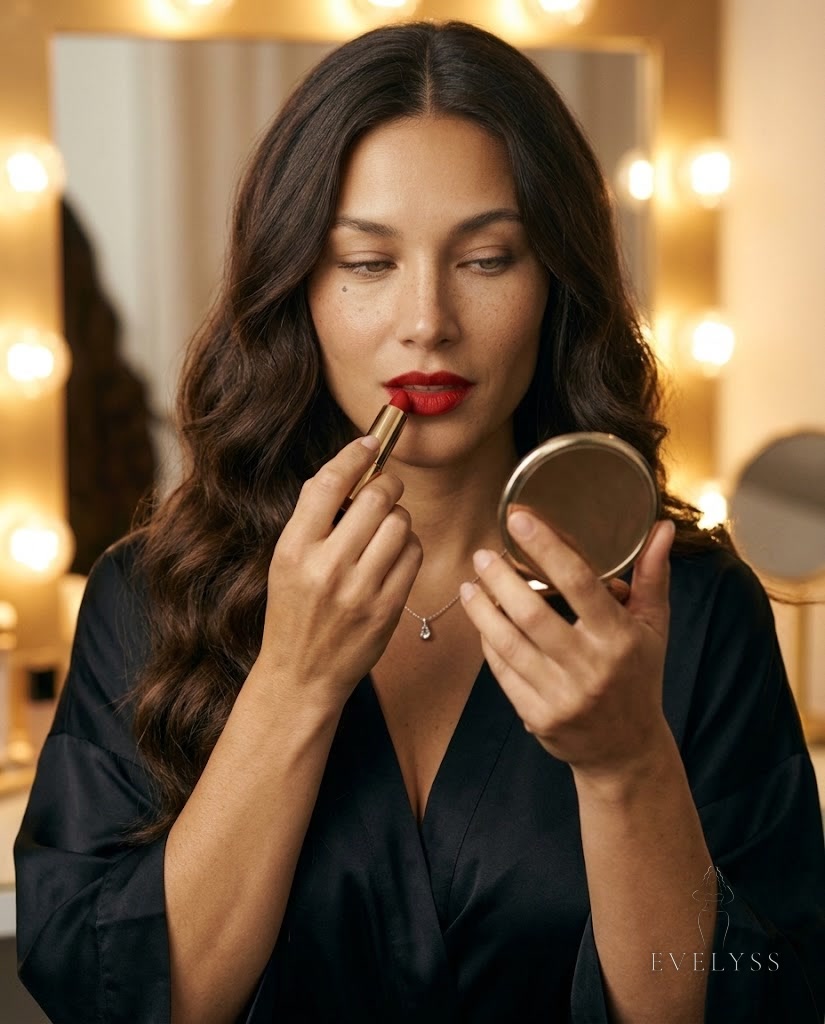
“There is no one red everyone needs. That line exists to sell one lipstick to everyone. I have no lipstick to sell you, so here's the method instead, and the best red is the one you'll actually put on.”Her take
Why there's no 'universal' red
Red covers a huge range: cool reds with a blue base, warm reds that lean orange or brick, true reds in between, plus anything from sheer to opaque and from bright to deep. A shade marketed as flattering on everyone is usually a balanced, neutral red. That's safe, but it's rarely the one that looks best on you.
Two things decide whether a red works: how its base interacts with your skin's undertone, and how its depth compares with your overall colouring. You can work out both at home in about ten minutes.
Step 1: Work out your undertone
Undertone is the colour under the surface of your skin, and it stays the same whether you're pale in winter or tanned in summer. It's usually described as cool (pink, rosy or bluish), warm (golden, peachy or yellow) or neutral (a mix). None of these checks is perfect on its own, so use several and see which way most of them point.
- Veins on the inner wrist in daylight: mostly blue or purple suggests cool, mostly green suggests warm, hard to tell suggests neutral.
- Jewelry: if silver tends to look brighter against your skin, lean cool; if gold does, lean warm; if both work, neutral.
- White fabric next to your bare face: stark white flattering points to cool, cream or ivory flattering points to warm.
- How you react to sun is not a reliable guide on its own, so don't rely on it.
Step 2: Test on your lips, not your hand
The back of your hand is a different colour from your lips and is nowhere near your face. Testing a swatch there tells you almost nothing about how the shade will look on you. Your natural lip colour shows through and changes the result, and the colour has to work next to your skin, eyes and teeth.
If you're testing in a shop, use the store's single-use applicators or cotton swabs and only test where hygiene practices allow it. At home, wipe the lip clean, put the shade on properly and step back from the mirror. Up close you see the texture. From arm's length you see the colour.
Step 3: Blue-red against orange-red, side by side
This is the test that settles it. Put a blue-based red on one half of your mouth and an orange-based red on the other. Go to a window or outside: daylight is the most honest light you'll get. Look at your face as a whole, not just the lips.
The right base makes your skin look clearer and more even, your eyes brighter and your teeth whiter. The wrong one can make the skin look sallow, or make redness around the nose stand out. Cool undertones usually suit the blue side, warm undertones the orange side, and neutral undertones can often wear both or a true red in between. If neither side wins, try a true red to settle it.
Step 4: Choose depth and finish
Once you know the base, choose how deep and how opaque. A brighter, lighter red can look lively on fair or light skin. Deeper skin tones often look striking in rich, saturated reds like deep cherry or brick. Those are starting points, not rules. Contrast is part of the appeal of red, and plenty of people suit the bright end at any skin depth.
Finish matters just as much. Matte looks polished and lasts longer, but it shows dry lips. Satin and cream finishes are more forgiving. A sheer red or a tinted balm in a red shade is the easiest way to start if bright red feels like a lot.
The honest part: the red you'll actually wear
The 'perfect' shade is useless if it sits in a drawer because it feels like too much for a Tuesday. If a full opaque red feels loud, start with a sheer version in the right base and wear it until it feels normal. Then go more opaque.
Keep the rest of the face simple when you wear red: even skin, groomed brows, mascara. A clean liner in the same tone keeps the edge sharp. The lip is the statement, so nothing else needs to compete with it.
Questions people ask
What red lipstick suits warm undertones?
Warm undertones usually look best in orange-leaning reds such as tomato, coral-red or brick. Do the side-by-side daylight test to confirm.
What red lipstick suits cool undertones?
Cool undertones tend to suit blue-based reds such as cherry, raspberry-red or deep crimson, which can also make teeth look whiter.
Can anyone wear red lipstick?
Yes. Undertone decides the base, depth decides how bright or deep, and a sheer formula makes red easy to start with.
Why does my red lipstick make my teeth look yellow?
Orange-leaning reds can bring out warmth in teeth. Try a blue-based or true red and compare the two in daylight.
The takeaway
Work out your undertone, test on your lips, compare a blue-red and an orange-red in daylight, then pick the depth and finish you'll actually wear.
Read next
Ask Evelyss. She answers on camera.
Follow @msevelyss on Instagram and TikTok, and leave your question in the comments.