EVELYSS / Guides / Accessories & Jewelry
Accessories & Jewelry · Ms. EvelyssHow to Choose Sunglasses for Your Face Shape
Choose frames about as wide as the widest part of your face, with the top of the frame sitting close to your brow line. Then pick a shape that contrasts with your face: angular for round faces, rounded for square. Fit on the nose matters more than the trend, and check for a UV protection label.
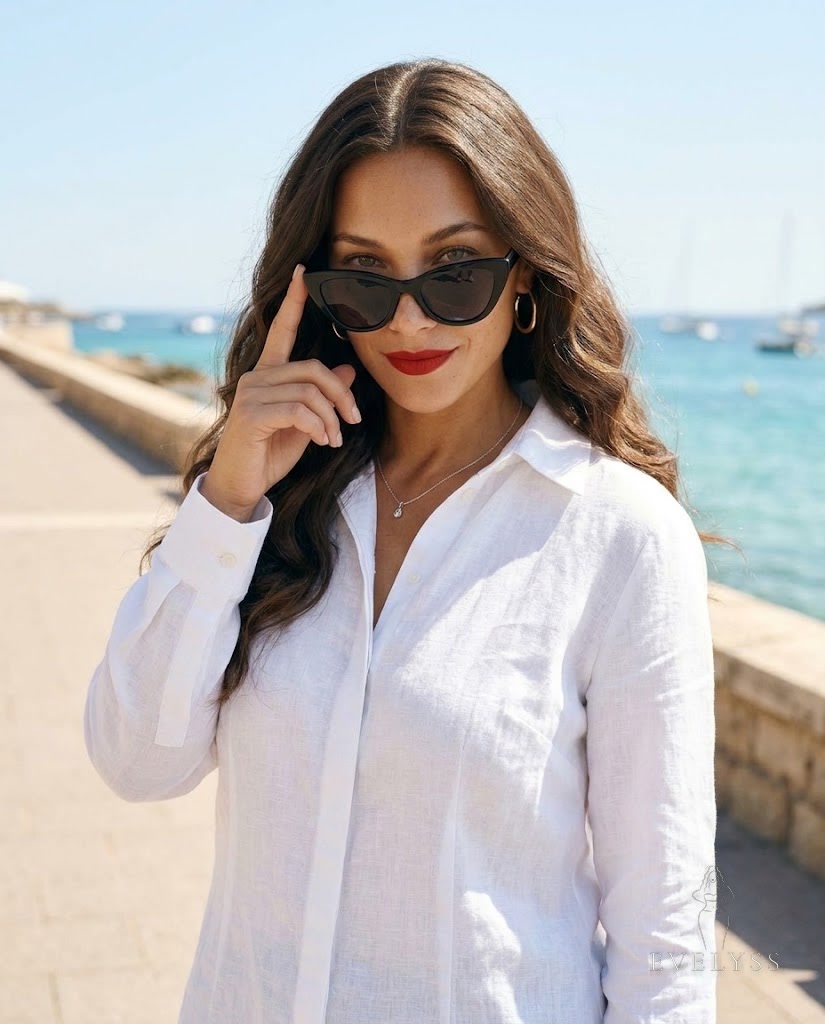
“Dark lenses aren't the same as protective lenses, and an expensive price tag isn't either. Read the label; the colour of the lens tells you nothing.”Her take
Start with width, not shape
Before you think about cat-eye versus aviator, think about width. The frame should be roughly as wide as the widest part of your face, usually at the cheekbones or temples. Too narrow and your face looks wider than it is, with the arms pressing into your temples. Too wide and the frames slide down and look borrowed.
A quick check in the mirror: look straight ahead and see where the outer edges of the frame land. They should line up with the sides of your face, or extend just slightly past them. If there's a gap between the frame and the edge of your face, they're too narrow.
The brow line rule
The top of the frame should sit close to your eyebrows: following their line, just below them, or just covering them. If your brows float far above the frame, you get a strange double line across your face. If the frame sits well above your brows, the glasses look like they're perched on top.
This is why the same style can look great on one person and odd on another. Someone with low, straight brows will look better in a frame with a flatter top. Someone with high, arched brows can wear a frame with a lifted outer corner that follows the arch.
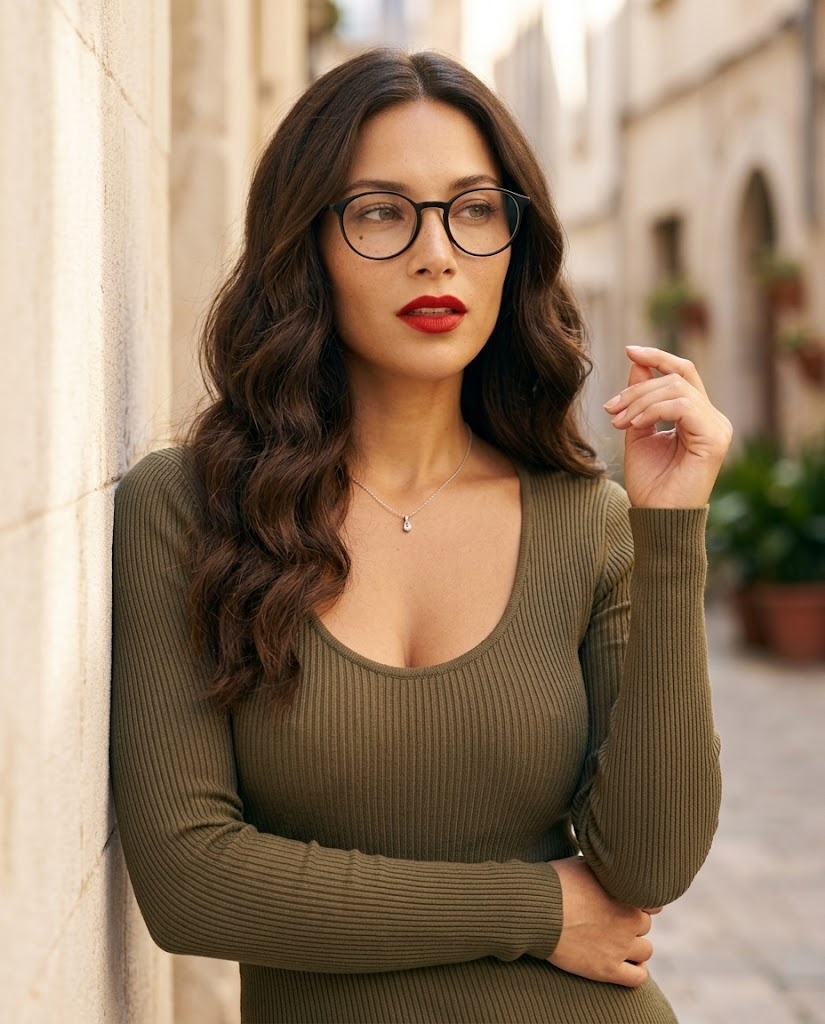
Then pick a shape that contrasts with your face
Once width and brow line are right, shape is the finishing touch. The general principle is contrast: angles balance curves, and curves soften angles.
- Round face: rectangular, square or slightly angular frames add structure. Very round frames repeat the roundness.
- Square face: round, oval or aviator shapes soften a strong jaw. Avoid boxy, heavy frames.
- Oval face: most shapes work, so proportion and width are your only real limits.
- Heart face (wider forehead, narrower chin): frames that are lighter on top or wider at the bottom, like aviators or rimless styles, balance the forehead.
- Long face: deeper, oversized or wraparound frames with some height break up the length.
Fit on the nose and ears matters more than the trend
The most fashionable frame in the world will look wrong if it slips down your nose every few minutes. Push the glasses up and look down at the floor, then shake your head gently. They should stay. The bridge should rest on your nose without pinching or leaving a deep mark, and the lenses shouldn't touch your cheeks when you smile.
If you have a low nose bridge or high cheekbones, look for frames with adjustable nose pads or styles described as low-bridge or alternative fit; these sit higher and stop the lenses resting on your cheeks. Check the arms too: they should run straight back to your ears and curve gently behind them, without pressing on the temples. An optician can often adjust the arms and pads for you.
Check the UV protection label
Lens darkness has nothing to do with how much ultraviolet light is blocked. A dark lens without UV protection can be worse than none, because your pupils open up in the shade of the lens and let in more light. Price doesn't guarantee protection either. What matters is the label.
Look for wording such as 100% UV protection, UV400 or blocks UVA and UVB. Labelling standards vary by country, so check what the label in your region means; in some places you'll also see a lens category number indicating how dark the lens is. Polarised lenses cut glare from water and roads, which is lovely for driving and beaches, but polarisation is separate from UV protection, so check for both. If you're unsure about a pair you already own, an optician can test the lenses.
Questions people ask
How wide should sunglasses be?
Roughly as wide as the widest part of your face, with the outer edges in line with or just past the sides of your face.
Are darker sunglasses better for your eyes?
Not necessarily. Darkness doesn't indicate UV protection; check for a label such as 100% UV protection or UV400.
What sunglasses suit a round face?
Rectangular, square or slightly angular frames, as wide as your cheekbones, with the top of the frame near your brows.
What if sunglasses keep sliding down my nose?
Look for frames with adjustable nose pads or a low-bridge fit, or ask an optician to adjust the pads and arms.
The takeaway
Get the width and brow line right, make sure they stay put on your nose, choose a contrasting shape, and confirm UV protection on the label rather than trusting the tint.
Read next
Ask Evelyss. She answers on camera.
Follow @msevelyss on Instagram and TikTok, and leave your question in the comments.